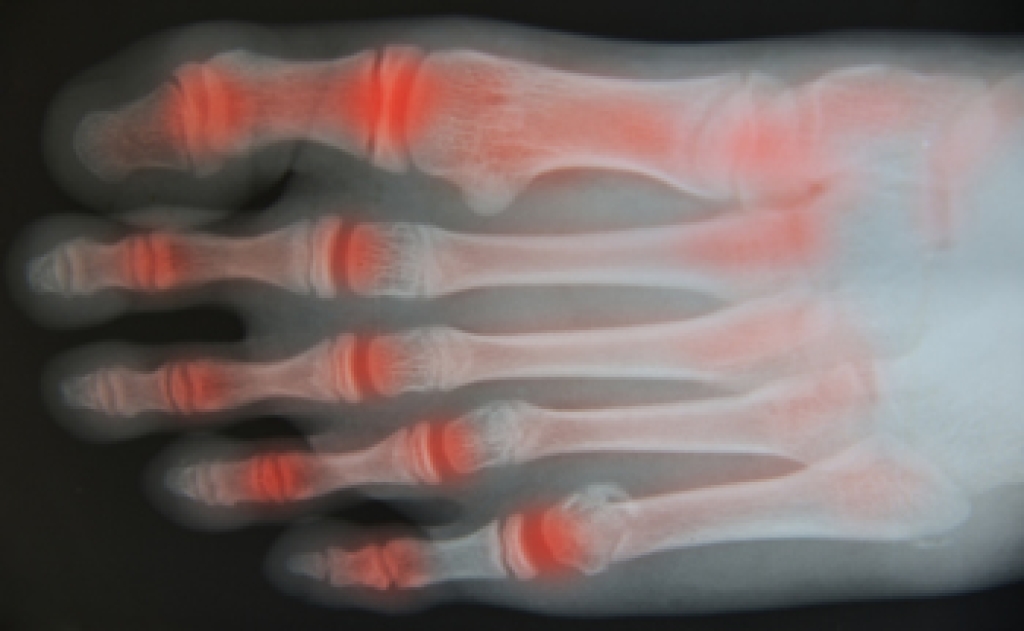
Symptoms of Psoriatic Arthritis in the Feet

Psoriatic arthritis (PsA) is a chronic autoimmune disease that affects the joints, including those on the feet. It typically affects people who have a skin condition called psoriasis. When PsA affects the feet, it produces symptoms such as painful toe swelling, joint stiffness, pain in the heels and soles of your feet, and dented or crumbling toenails. The condition has a pattern of flaring up and then subsiding. Your podiatrist can be an important part of your healthcare team when it comes to dealing with PsA in the feet. A podiatrist can help you find comfortable shoes and orthotics, maintain your mobility, and relieve symptoms during a flare up. To learn more, speak to a podiatrist today. 

Arthritis can be a difficult condition to live with. If you are seeking treatment, contact Dr. Michael T. Hames from Florence Foot Center. Our doctor can provide the care you need to keep you pain-free and on your feet.

Arthritic Foot Care  

Arthritis is a term that is commonly used to describe joint pain.  The condition itself can occur to anyone of any age, race, or gender, and there are over 100 types of it.  Nevertheless, arthritis is more commonly found in women compared to men, and it is also more prevalent in those who are overweight. The causes of arthritis vary depending on which type of arthritis you have. Osteoarthritis for example, is often caused by injury, while rheumatoid arthritis is caused by a misdirected immune system.

Symptoms

  • Swelling
  • Pain
  • Stiffness
  • Decreased Range of Motion

Arthritic symptoms range in severity, and they may come and go. Some symptoms stay the same for several years but could potentially get worse with time. Severe cases of arthritis can prevent its sufferers from performing daily activities and make walking difficult.

Risk Factors

  • Occupation – Occupations requiring repetitive knee movements have been linked to osteoarthritis
  • Obesity – Excess weight can contribute to osteoarthritis development
  • Infection – Microbial agents can infect the joints and trigger arthritis
  • Joint Injuries – Damage to joints may lead to osteoarthritis
  • Age – Risk increases with age
  • Gender –Most types are more common in women
  • Genetics – Arthritis can be hereditary

If you suspect your arthritis is affecting your feet, it is crucial that you see a podiatrist immediately. Your doctor will be able to address your specific case and help you decide which treatment method is best for you.

If you have any questions please feel free to contact our office located in Florence, Alabama . We offer the newest diagnostic tools and technology to treat your foot and ankle needs.


Read more about How to Care for Your Arthritic Foot

Did I Break My Foot?

There are 26 bones in the foot, which means that there are a variety of complex ways the foot can be fractured. These types of fractures can include toe fractures, midfoot fractures (metatarsal fractures), sesamoid fractures, or fractures to the bones at the back of the foot (e.g., the heel bone). If a foot is fractured, it will be very painful, and putting weight on it or walking will likely be difficult. If you believe that you have broken your foot, consulting with a podiatrist is suggested because you may need X-rays to confirm the fracture and a professional will be able to determine the best treatment options for you. Common treatment options for a broken foot include splints, casts, physical therapy, and keeping weight off of it.

A broken foot requires immediate medical attention and treatment. If you need your feet checked, contact Dr. Michael T. Hames from Florence Foot Center. Our doctor can provide the care you need to keep you pain-free and on your feet.

Broken Foot Causes, Symptoms, and Treatment

A broken foot is caused by one of the bones in the foot typically breaking when bended, crushed, or stretched beyond its natural capabilities. Usually the location of the fracture indicates how the break occurred, whether it was through an object, fall, or any other type of injury. 

Common Symptoms of Broken Feet:

  • Bruising
  • Pain
  • Redness
  • Swelling
  • Blue in color
  • Numbness
  • Cold
  • Misshapen
  • Cuts
  • Deformities

Those that suspect they have a broken foot shoot seek urgent medical attention where a medical professional could diagnose the severity.

Treatment for broken bones varies depending on the cause, severity and location. Some will require the use of splints, casts or crutches while others could even involve surgery to repair the broken bones. Personal care includes the use of ice and keeping the foot stabilized and elevated.

If you have any questions, please feel free to contact our office located in Florence, Alabama . We offer the newest diagnostic and treatment technologies for all your foot care needs.

Read more about Causes, Symptoms, and Treatment for a Broken Foot

Plantar Fasciitis and Other Causes of Heel Pain

Most heel pain is caused by a local condition occurring in the foot. The most common type of heel pain is due to plantar fasciitis—an inflammation of the long band of tissue running along the bottom of the foot, connecting the toes with the heel. Anyone can have plantar fasciitis. However, athletes and people who are obese or have diabetes, flat feet, or who wear worn out shoes, are more susceptible to developing this painful condition. Heel spurs may often occur along with plantar fasciitis because the strain on the heel bone which causes plantar fasciitis can also lead to calcium deposits forming on the bone (heel spurs). When the bursa sac at the back of the heel becomes irritated and inflamed, this is known as bursitis. A condition called “pump bump” also affects the back of the heel when pressure from wearing pumps causes a painful, bony growth to develop. Podiatrists are very experienced in treating these forms of heel pain and more, so if you experience any heel discomfort, make an appointment today.

Many people suffer from bouts of heel pain. For more information, contact Dr. Michael T. Hames of Florence Foot Center. Our doctor can provide the care you need to keep you pain-free and on your feet.

Causes of Heel Pain

Heel pain is often associated with plantar fasciitis. The plantar fascia is a band of tissues that extends along the bottom of the foot. A rip or tear in this ligament can cause inflammation of the tissue.

Achilles tendonitis is another cause of heel pain. Inflammation of the Achilles tendon will cause pain from fractures and muscle tearing. Lack of flexibility is also another symptom.

Heel spurs are another cause of pain. When the tissues of the plantar fascia undergo a great deal of stress, it can lead to ligament separation from the heel bone, causing heel spurs.

Why Might Heel Pain Occur?

  • Wearing ill-fitting shoes                
  • Wearing non-supportive shoes
  • Weight change           
  • Excessive running

Treatments

Heel pain should be treated as soon as possible for immediate results. Keeping your feet in a stress-free environment will help. If you suffer from Achilles tendonitis or plantar fasciitis, applying ice will reduce the swelling. Stretching before an exercise like running will help the muscles. Using all these tips will help make heel pain a condition of the past.

If you have any questions, please feel free to contact our office located in Florence, Alabama . We offer the newest diagnostic and treatment technologies for all your foot care needs.

Read more about Heel Pain

Gout and the Holiday Season

Indulgent foods are everywhere during the holiday season, and while you might be well aware of their effects on your waistline, you may be less aware of their effect on your foot health. If you have previously experienced a gout attack, or are at risk of gout due to family history or underlying conditions, it is very important to watch what you eat and drink during the holidays. Food and drinks rich in purines, such as red meats, shellfish, and alcoholic or sugary beverages, can lead to increased uric acid levels in the bloodstream. An overabundance of uric acid can cause urea crystals to form and lodge in the joints of the feet, leading to painful gout flare ups. To learn more about the connection between nutrition and foot health, speak with a podiatrist today. 

Gout is a painful condition that can be treated. If you are seeking treatment, contact Dr. Michael T. Hames from Florence Foot Center. Our doctor will treat your foot and ankle needs.

What Is Gout?

Gout is a form of arthritis that is characterized by sudden, severe attacks of pain, redness, and tenderness in the joints. The condition usually affects the joint at the base of the big toe. A gout attack can occur at any random time, such as the middle of the night while you are asleep.

Symptoms

  • Intense Joint Pain - Usually around the large joint of your big toe, and it most severe within the first four to twelve hours
  • Lingering Discomfort - Joint discomfort may last from a few days to a few weeks
  • Inflammation and Redness -Affected joints may become swollen, tender, warm and red
  • Limited Range of Motion - May experience a decrease in joint mobility

Risk Factors

  • Genetics - If family members have gout, you’re more likely to have it
  • Medications - Diuretic medications can raise uric acid levels
  • Gender/Age - Gout is more common in men until the age of 60. It is believed that estrogen protects women until that point
  • Diet - Eating red meat and shellfish increases your risk
  • Alcohol - Having more than two alcoholic drinks per day increases your risk
  • Obesity - Obese people are at a higher risk for gout

Prior to visiting your podiatrist to receive treatment for gout, there are a few things you should do beforehand. If you have gout you should write down your symptoms--including when they started and how often you experience them, important medical information you may have, and any questions you may have. Writing down these three things will help your podiatrist in assessing your specific situation so that he or she may provide the best route of treatment for you.

If you have any questions, please feel free to contact our office located in Florence, Alabama . We offer the newest diagnostic and treatment technologies for all your foot care needs.

Read more about Everything You Need to Know About Gout

How Are Toe Fractures Treated?

With symptoms such as pain, redness, swelling, bruising, and difficulty walking, a broken toe can be a difficult injury to endure. Fortunately, most broken toes heal properly when they are promptly treated. Your podiatrist will typically be able to diagnose the toe fracture using an X-ray or MRI. Depending on the severity of the fracture, treatment options may include buddy taping or splinting the broken toe, using a support device such as crutches or a walking boot to help you walk, and taking medications. Resting, icing, and elevating the foot may also help to reduce pain. More serious fractures may require surgery, particularly if the bone is displaced or if the toe joint is damaged. To learn more about treatments for broken toes, please consult with a podiatrist.  

Broken toes may cause a lot of pain and should be treated as soon as possible. If you have any concerns about your feet, contact Dr. Michael T. Hames from Florence Foot Center. Our doctor will treat your foot and ankle needs.

What Is a Broken Toe?

A broken toe occurs when one or more of the toe bones of the foot are broken after an injury. Injuries such as stubbing your toe or dropping a heavy object on it may cause a toe fracture.

Symptoms of a Broken Toe

  • Swelling
  • Pain (with/without wearing shoes)
  • Stiffness
  • Nail Injury

Although the injured toe should be monitored daily, it is especially important to have a podiatrist look at your toe if you have severe symptoms. Some of these symptoms include worsening or new pain that is not relieved with medication, sores, redness, or open wounds near the toe.

If you have any questions please feel free to contact our office located in Florence, Alabama . We offer the newest diagnostic tools and technology to treat your foot and ankle needs.

Read more about What to Know About a Broken Toe

Connect With Us