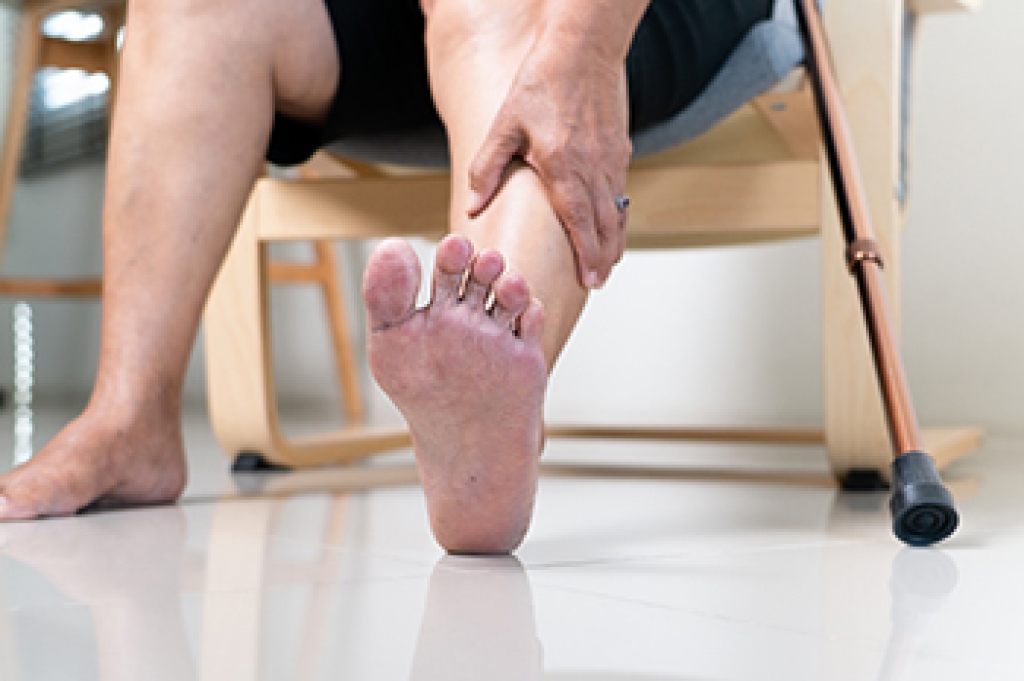
Intervention Can Help Improve Foot Health in Aging Adults

Foot pain does not necessarily have to be something older adults simply learn to live with. Many conditions can be treated successfully or managed to provide relief, and help the aging adult remain as active and independent as possible. Common foot disorders in older adults include corns and calluses, fungal nail infections and ingrown toenails, bunions, hammertoes and clawtoes, and complications due to systemic conditions such as rheumatoid arthritis, gout, and diabetes. A simple approach to overall foot health includes routine foot hygiene, help with trimming toenails (which can be very challenging for older adults), evaluating and modifying footwear to ensure proper fit, comfort, and support, and the use of orthotics to correct and manage various foot disorders. Additionally, regular podiatric care can improve and maintain the level of overall foot health in senior citizens.

Proper foot care is something many older adults forget to consider. If you have any concerns about your feet and ankles, contact Dr. Michael T. Hames from Florence Foot Center. Our doctor can provide the care you need to keep you pain-free and on your feet.

The Elderly and Their Feet

As we age we start to notice many changes in our body, but the elder population may not notice them right away. Medical conditions may prevent the elderly to take notice of their foot health right away. Poor vision is a lead contributor to not taking action for the elderly.

Common Conditions 

  • Neuropathy – can reduce feeling in the feet and can hide many life-threatening medical conditions.
  • Reduced flexibility – prevents the ability of proper toenail trimming, and foot cleaning. If left untreated, it may lead to further medical issues.
  • Foot sores – amongst the older population can be serious before they are discovered. Some of the problematic conditions they may face are:
  • Gouging toenails affecting nearby toe
  • Shoes that don’t fit properly
  • Pressure sores
  • Loss of circulation in legs & feet
  • Edema & swelling of feet and ankles

Susceptible Infections

Diabetes and poor circulation can cause general loss of sensitivity over the years, turning a simple cut into a serious issue.

If you have any questions, please feel free to contact our office located in Florence, Alabama . We offer the newest diagnostic and treatment technologies for all your foot care needs.

Read more about Elderly Foot Care

Resting the Foot With Sesamoiditis

Sesamoiditis is a foot condition in which the sesamoid bones, located in the ball of the foot just beneath the big toe, become injured or inflamed. If you have sesamoiditis, it is very important that you rest the affected foot, however, this can be somewhat difficult without proper planning. To give your foot time to heal, you will likely need to avoid putting pressure and weight on the foot as much as possible. In the early stages of healing, when the sesamoids and surrounding areas are inflamed, it may help to also avoid bending the toes. Do simple ankle stretches and strengthening exercises to maintain your ankle mobility. Good ankle mobility can help keep excess pressure off of your sesamoids when you walk. Finally, wearing the right shoes can be very helpful during the healing process. Choose shoes with a wide toe box and without high heels. A podiatrist may also suggest orthotics. If you have sesamoiditis, please consult with your local podiatrist. 

Sesamoiditis is an unpleasant foot condition characterized by pain in the balls of the feet. If you think you’re struggling with sesamoiditis, contact Dr. Michael T. Hames of Florence Foot Center. Our doctor will treat your condition thoroughly and effectively.

Sesamoiditis

Sesamoiditis is a condition of the foot that affects the ball of the foot. It is more common in younger people than it is in older people. It can also occur with people who have begun a new exercise program, since their bodies are adjusting to the new physical regimen. Pain may also be caused by the inflammation of tendons surrounding the bones. It is important to seek treatment in its early stages because if you ignore the pain, this condition can lead to more serious problems such as severe irritation and bone fractures.

Causes of Sesamoiditis

  • Sudden increase in activity
  • Increase in physically strenuous movement without a proper warm up or build up
  • Foot structure: those who have smaller, bonier feet or those with a high arch may be more susceptible

Treatment for sesamoiditis is non-invasive and simple. Doctors may recommend a strict rest period where the patient forgoes most physical activity. This will help give the patient time to heal their feet through limited activity. For serious cases, it is best to speak with your doctor to determine a treatment option that will help your specific needs.

If you have any questions, please feel free to contact our office located in Florence, Alabama . We offer the newest diagnostic and treatment technologies for all your foot care needs.
Read more about Sesamoiditis

What Is a Plantar Fibroma?

A plantar fibroma is a non-cancerous growth that grows inside the bottom of the foot on the plantar fascia. A plantar fibroma is usually slow-growing and less than an inch in size, however, it can be painful, especially if it is growing in an area that is under direct pressure. You can recognize a plantar fibroma by a visible nodule on the sole of your foot, typically located at the highest point of the arch. The underlying cause of plantar fibromas is unknown, but it is thought that genetics play a role. This condition is also more common in men, people who have diabetes, and those who suffer repetitive foot trauma. Treatment for plantar fibromas include observations (if the nodule is asymptomatic), corticosteroid injections, orthotics, and surgery. If you have a lump on the sole of your foot, please consult with a podiatrist. 

Foot Pain

Foot pain can be extremely painful and debilitating. If you have a foot pain, consult with Dr. Michael T. Hames from Florence Foot Center. Our doctor will assess your condition and provide you with quality foot and ankle treatment.

Causes

Foot pain is a very broad condition that could be caused by one or more ailments. The most common include:

  • Bunions
  • Hammertoes
  • Plantar Fasciitis
  • Bone Spurs
  • Corns
  • Tarsal Tunnel Syndrome
  • Ingrown Toenails
  • Arthritis (such as Gout, Rheumatoid, and Osteoarthritis)
  • Flat Feet
  • Injury (from stress fractures, broken toe, foot, ankle, Achilles tendon ruptures, and sprains)
  • And more

Diagnosis

To figure out the cause of foot pain, podiatrists utilize several different methods. This can range from simple visual inspections and sensation tests to X-rays and MRI scans. Prior medical history, family medical history, and any recent physical traumatic events will all be taken into consideration for a proper diagnosis.

Treatment

Treatment depends upon the cause of the foot pain. Whether it is resting, staying off the foot, or having surgery; podiatrists have a number of treatment options available for foot pain.

If you have any questions, please feel free to contact our office located in Florence, Alabama . We offer the newest diagnostic and treatment technologies for all your foot care needs.

Read more about Foot Pain

Are You Suffering From Ingrown Toenails?

If left untreated, an ingrown toenail can lead to more serious concerns, such as an infection. Knowing proper nail care can help in the prevention of an ingrown toenail. Give us a call, and get treated!

Connect With Us